


What clearer probate support can give you
A practical starting checklist
We help you identify the core documents and estate information needed first.
Executor duties made clearer
The role is broken into steps so you can see what has to happen and when.
Realistic timescale guidance
We explain which stages depend on third parties and may take longer than expected.
Breaking probate into workable stages
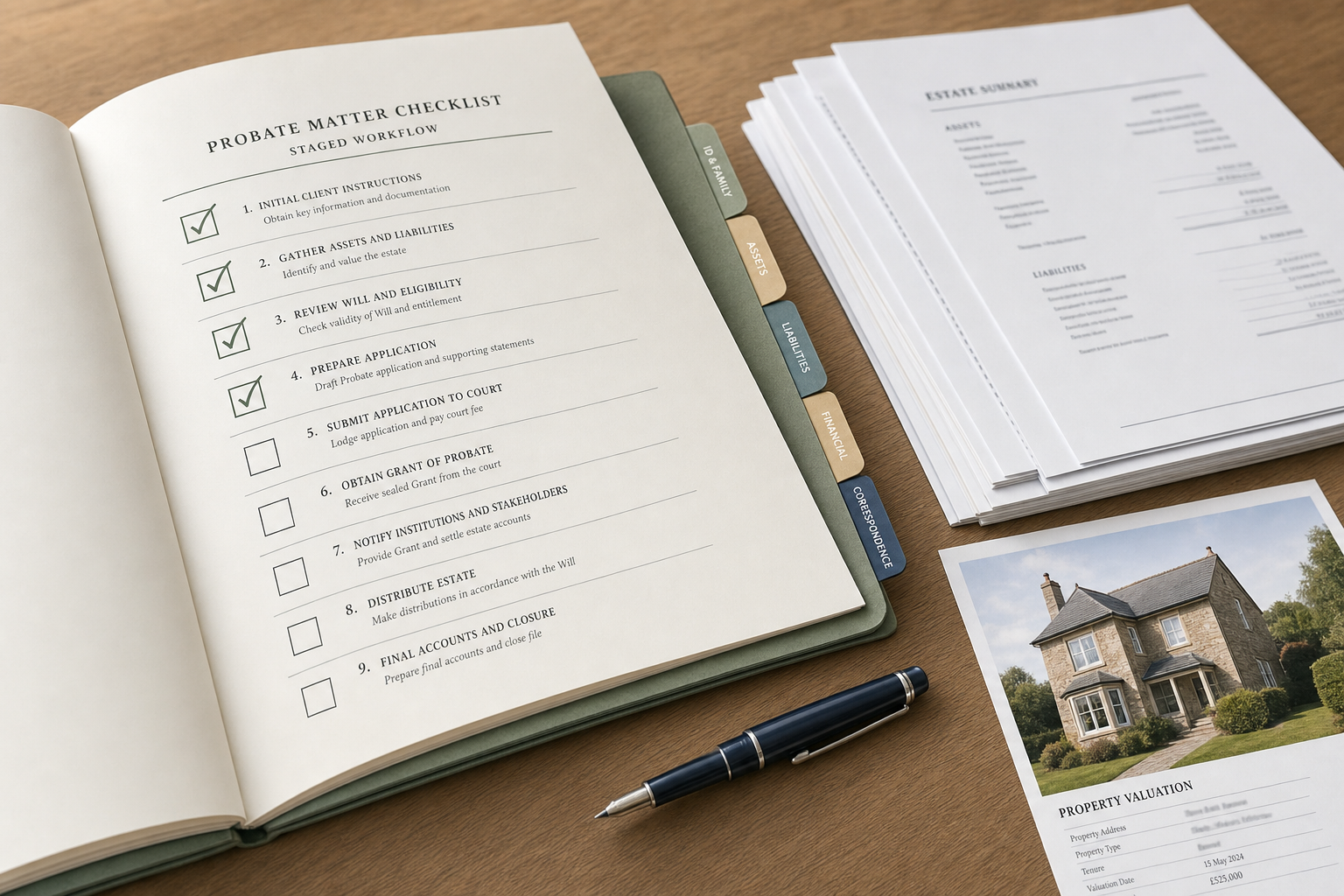
Probate often begins at a time when there is already a great deal to deal with, so clear steps matter. We explain the process from locating the will and confirming who the executors are, through valuing the estate, reporting tax information, applying for the grant and distributing assets. That also means looking at property, bank accounts, investments, debts and any records of significant gifts. With Virgo Wills and Estate Planning Limited, you can approach probate help as a structured piece of work rather than an unclear list of duties, which is often a relief for executors who have never handled an estate before.
What executors need to gather and do
Executors are responsible for protecting property, identifying debts, keeping estate accounts and following the will, so the detail matters. We can also explain how the work changes if there is no will, if inheritance tax is involved or if the estate includes a home, investments or business interests. When you bring the papers to Virgo Wills and Estate Planning Limited, we can help you identify what is missing and set expectations around stages that depend on outside bodies, such as financial institutions, tax authorities, the probate registry or the timing of an asset sale.
Frequently asked questions
What documents should an executor gather first?
Executors should try to gather the death certificate, the original will, details of bank accounts, savings, investments, property papers, debt information and records of significant gifts. That gives a starting point for valuing the estate and identifying what still needs to be traced.
How does probate change if there is no will?
Where there is no will, the estate is dealt with under the intestacy rules rather than the deceased's own written instructions. That can affect who applies, who inherits and how the estate is administered, so the early stages often need especially careful checking.
Why can probate take time?
Some parts of probate depend on other organisations. Banks, investment providers, tax authorities, the probate registry and property sales all work to their own timescales. Even where the executor is organised, progress can depend on when outside information or approvals arrive.